OD6 Metals (ASX: OD6) has identified an 8-kilometre epithermal alteration corridor at its Quinn Fluorspar Project in Nevada.
The target was defined using satellite and airborne hyperspectral analysis. The work highlights a large, continuous mineral system extending beyond historical workings.
The alteration zone stretches from the Dress Circle prospect to Mammoth. Within this, a 1.1-kilometre high-intensity corridor links Horseshoe and Jumbo targets.
Management said the scale of alteration supports the presence of a broader mineralised system.
“The scale of the alteration system, over 8km with intense zones of >1km strike, assists in targeting globally significant fluorspar systems,” Managing Director Brett Hazelden said.
High-grade context strengthens exploration case
The Quinn project already hosts high-grade fluorspar occurrences. Historical sampling has reported grades above 40% calcium fluoride at multiple prospects.
Rock chip results in the broader project area have reached up to 94% calcium fluoride.
Mineralisation occurs as replacement and breccia bodies within limestone. These can reach widths of 20 to 60 metres.
Vein-style mineralisation is narrower but can exceed 70% to 90% calcium fluoride.
Importantly, the new analysis suggests these known occurrences may form part of a larger connected system.
Remote sensing unlocks new targets
The study used EnMap satellite data and AVIRIS airborne hyperspectral imaging. These techniques detect mineral alteration signatures linked to hydrothermal systems.
Key alteration minerals identified include pyrophyllite, alunite, and muscovite. These are associated with fluid flow and epithermal mineralisation.
A previously untested “Dress Circle” anomaly has also emerged as a priority target.
This zone spans roughly 2 kilometres by 1.8 kilometres and displays intense alteration patterns.
Circular structures within the anomaly suggest a possible intrusive source at depth.
Strategic setting in critical mineral supply chain
Fluorspar is classified as a critical mineral in the United States. It is used in semiconductors, battery technologies, nuclear fuels, and defence applications.
The US currently imports all of its fluorspar supply.
The Quinn project sits about 300 kilometres from the US Strategic Minerals Reserve in Nevada.
This location places the project within an established mining jurisdiction with infrastructure access.
Next steps shift to ground validation
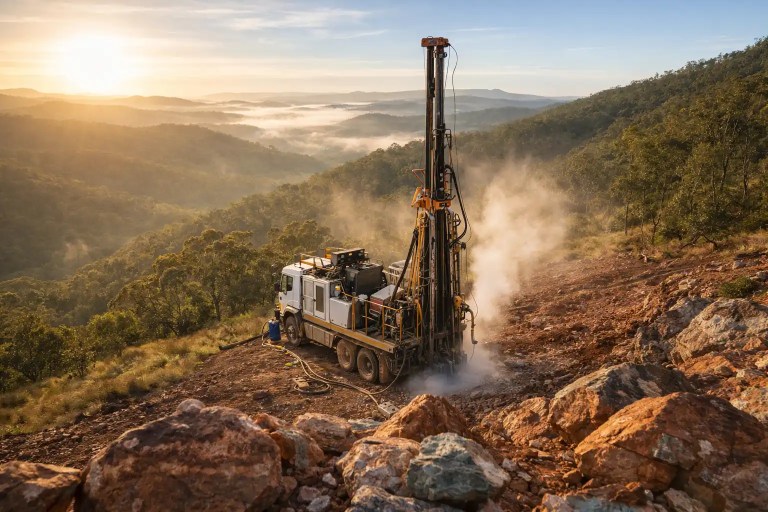
OD6 is preparing to commence on-ground exploration.
Planned work includes surface sampling, geological mapping, and soil geochemistry surveys.
The company will also verify historical grades and begin drill targeting across the district.
Permitting for an initial drill program is expected to follow.
The current program forms part of due diligence tied to the company’s option to acquire the project.
Context for investors
The results expand the project from isolated high-grade occurrences to a district-scale exploration play.
Remote sensing has outlined a continuous alteration system, which often correlates with mineralised fluid pathways.
The identification of linked corridors and new targets provides a basis for systematic drilling.
Future results will depend on confirming grade continuity and scale through fieldwork.