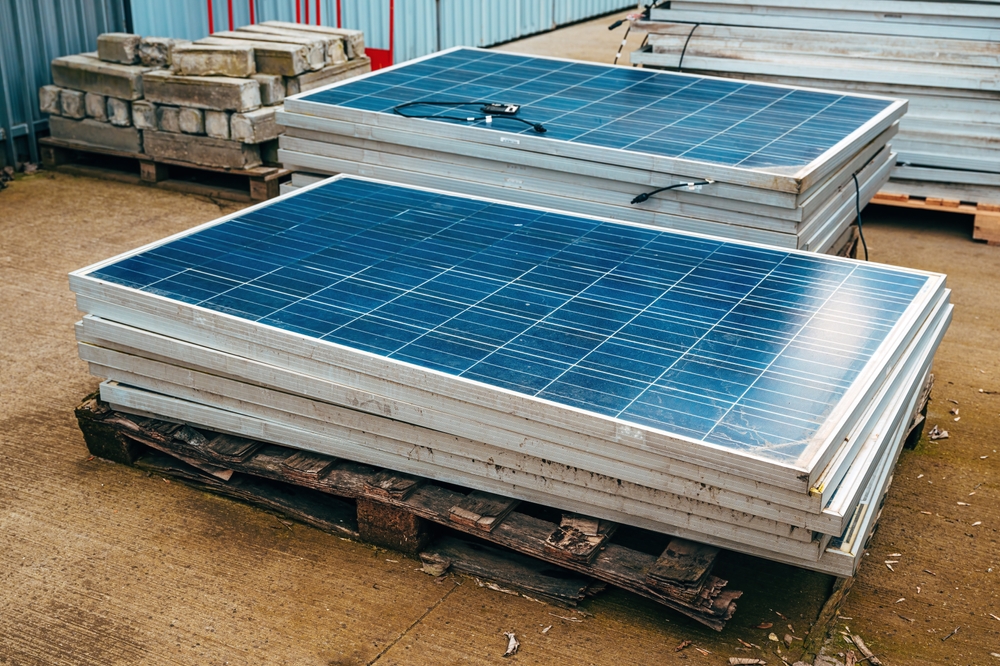
Bayan Mining and Minerals (BMM ASX) has secured an exclusive license for a groundbreaking solar cell recycling technology from Macquarie University. marking a transformative step into the clean tech sector and positioning the company at the forefront of Australia’s circular economy and critical minerals recovery.
The technology enables low-energy, room-temperature delamination of end-of-life solar panels. Unlike traditional methods which require crushing and heating at 1,400°C followed by chemical treatment, this microwave-based process softens the ethylene vinyl acetate (EVA) encapsulant. This facilitates the easy mechanical separation of glass, silicon, and valuable metals such as silver, gallium, indium, and copper.
Disrupting the Solar Waste Problem
Australia faces a looming solar waste crisis, with over 1 million tonnes of end-of-life solar panels expected to accumulate by 2035—representing more than A$1 billion in recoverable materials. Globally, the CIGS (Copper, Indium, Gallium, Selenide) solar cell market is forecast to reach US$12.23 billion by 2032, also fuelling demand for recycling solutions targeting rare and critical metals.
The microwave-based method, developed by Dr Binesh Veettil at Macquarie University, offers a cleaner, safer, and significantly more energy-efficient approach to solar panel recycling.
Because it avoids high heat and toxic chemicals, the technology drastically reduces greenhouse gas emissions and eliminates hazardous waste streams. Therefore, Bayan may now become a winner for ESG-focused investors.
“This innovation not only provides a sustainable solution to managing end-of-life photovoltaic modules but also lays the groundwork for broader applications in critical mineral recovery,” said Dr Veettil.
Strategic Opportunity in High-Value Material Recovery
BMM plans to commence further R&D to refine the recovery of high-purity silver, silicon, gallium, and indium. Each of these are crucial to the semiconductor, and high-tech manufacturing sectors. Silicon alone is used in over 90% of all solar panels and underpins AI processors, 5G networks, and microchips. Meanwhile, silver demand for solar applications is surging.
Not only costly, the traditional high-intensity shredding processes often contaminates or destroy valuable materials. Bayan’s licensed technology enables selective delamination—cleanly separating layers and preserving material integrity. This can lift overall recovery rates above 95% by value, as highlighted in recent life-cycle studies.
Clean Energy Meets Circular Economy
For Baya, the licensing deal marks a strategic pivot into the clean energy and recycling space. The technology can be readily integrated into existing solar panel recycling facilities and scaled with minimal infrastructure changes.
“The environmental and commercial advantages of this technology are enormous,” said a company spokesperson. “We’re not just solving a waste problem—we’re unlocking the full material value of Australia’s solar infrastructure.”
BMM ASX website can be found here.