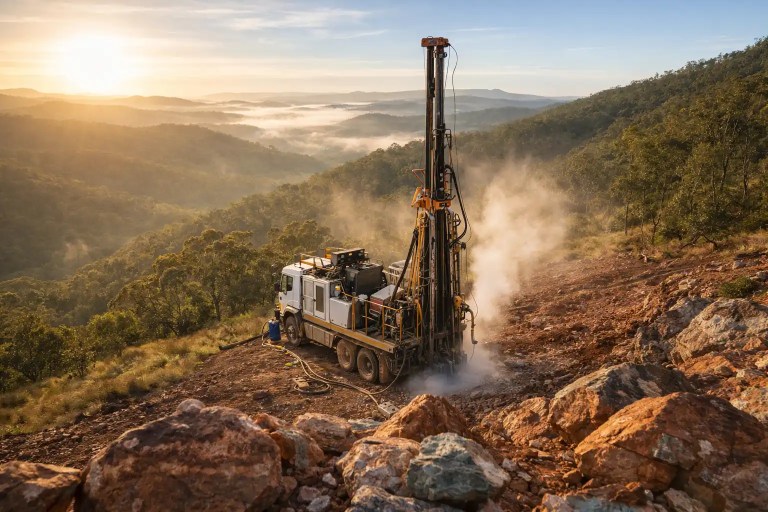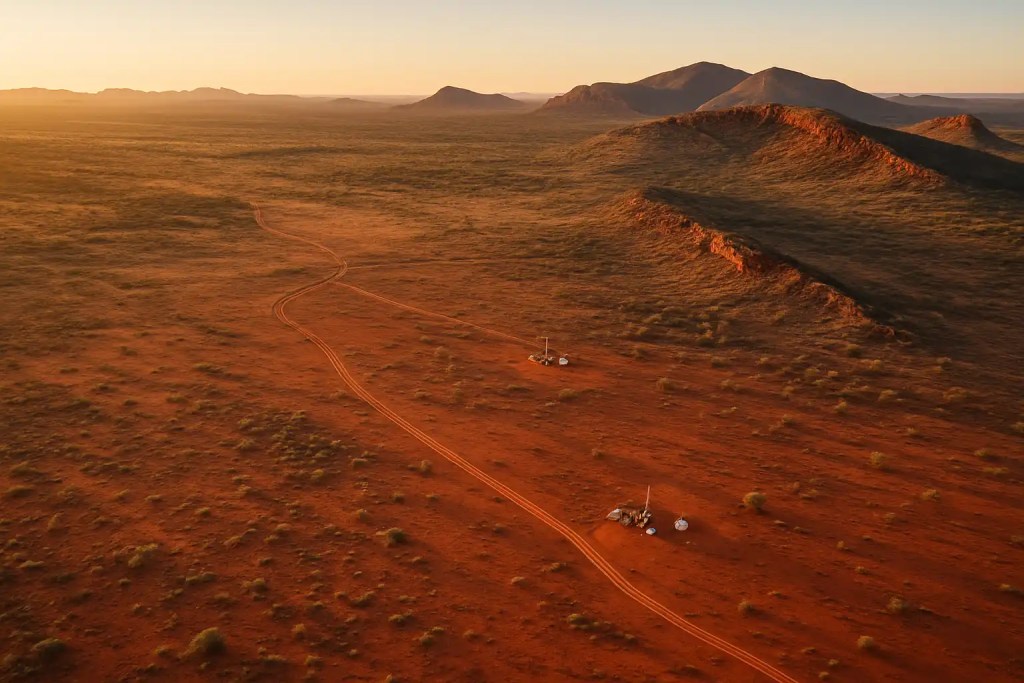
Litchfield Minerals (ASX: LMS) has expanded the scale of its Oonagalabi copper-zinc system in the Northern Territory, reporting the project’s widest mineralised interval to date. The new drill results enhance the footprint of the Main Zone and provide stronger foundation data ahead of broader programs planned for early 2026.
Broad Intervals Strengthen Main Zone Footprint
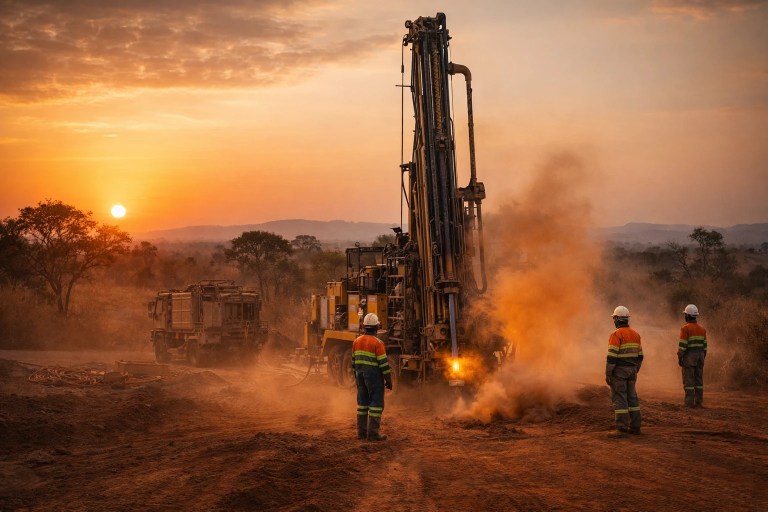
The key result came from hole OGRC014, which delivered 148 metres of mineralisation from 17 metres depth. The interval included 90 metres at 0.6% copper and 1.8% zinc, with internal zones such as 15 metres at 1.0% copper and 1.4% zinc, and 29 metres at 0.6% copper and 3.0% zinc. This hole sits 170 metres northeast of OGRC010, confirming continuity across a meaningful strike extension.
The Main Zone now spans 1.5 kilometres of outcrop and roughly 3 kilometres of subcrop. Three additional holes have been drilled in Phase Three, intersecting further intervals of the Oonagalabi Formation, with assays pending.
Geophysics Points to a Larger Intrusive System
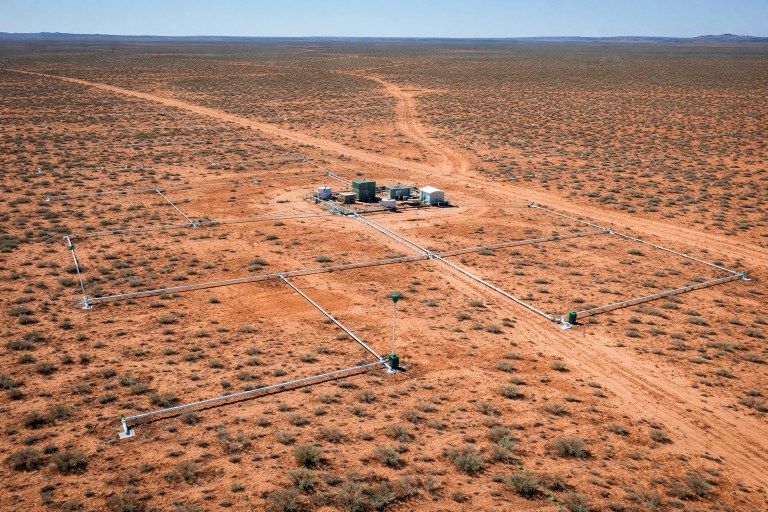
Litchfield Minerals (ASX: LMS) continues to refine its intrusion-related model across multiple geophysical targets. VT2 returned 26 metres at 0.1% copper and 0.5% zinc, including six metres at higher grades. Drilling intersected massive and semi-massive iron sulphides on the edge of a 400-metre conductive plate, validating the target as a genuine mineral-bearing system.
At the Bomb-Diggity intrusive cluster, copper-zinc-iron sulphides were intersected within amphibolite, confirming fertility despite an absence of high-grade assays. VT1 remains undrilled after the first attempt passed 75 metres off the main conductor plate. Fixed-loop EM is now refining plate geometry ahead of 2026 drilling.
Litchfield interprets sulphide-bearing intrusions as evidence of a deeper magmatic engine underpinning the broader Oonagalabi system. Iron-rich sulphides at surface are consistent with outer thermal zones in large polymetallic systems, where copper-dominant zones often develop at depth.
Foundation Set for Aggressive 2026 Programs
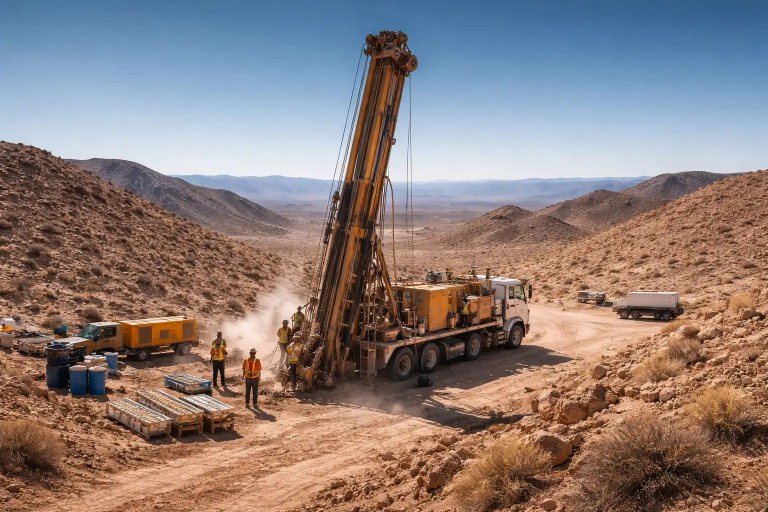
Litchfield is funded to operate through December and into the 2026 field season. Diamond drilling begins in January, with a planned 700-metre hole into Bomb-Diggity and a 300-metre hole through the Main Zone. RC drilling will target VT1, VT2, the eastern structural corridor and step-outs toward Silverado. An IP survey starting mid-January aims to tighten modelling of the southern extension.
If upcoming work supports the intrusion-related thesis, Oonagalabi may offer both shallow carbonate-hosted scale and deeper intrusive-center potential, giving Litchfield dual pathways for resource expansion.
Receive your news from the StockSurge Squawkbox – spoken audio of price sensitive and other important ASX announcements – and more.