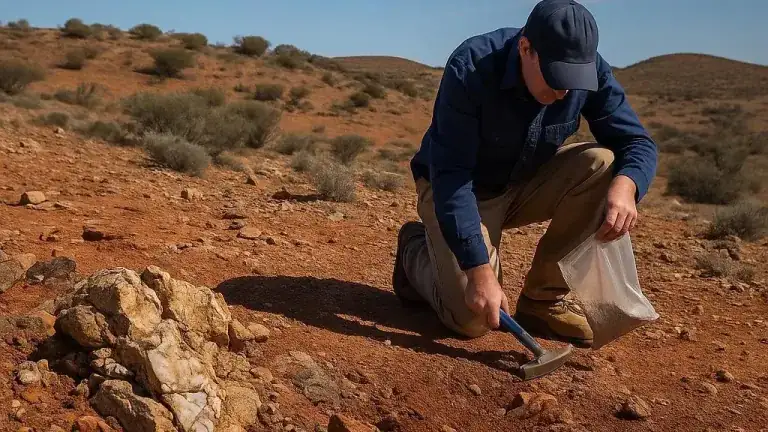
Heavy Rare Earths (ASX:HRE) has reported strong scandium, yttrium and uranium assays from new reconnaissance sampling at its Radium Hill project. The results confirm critical mineralisation along an 8-kilometre structural corridor that extends northeast from Australia’s first uranium mine. The corridor has become a central focus of HRE’s revised exploration strategy after recent geophysics and historical dataset reviews suggested broader mineralisation potential.
The update matters because scandium and yttrium remain difficult-to-source inputs for aerospace alloys, solid-oxide fuel cells and emerging energy technologies. Reliable domestic supply is limited, and Australia hosts only a small group of known scandium-enriched deposits. HRE’s results indicate the Radium Hill system could contain multiple mineralised zones, adding optionality for future resource definition work.
High-Grade Results Across Multiple Prospects
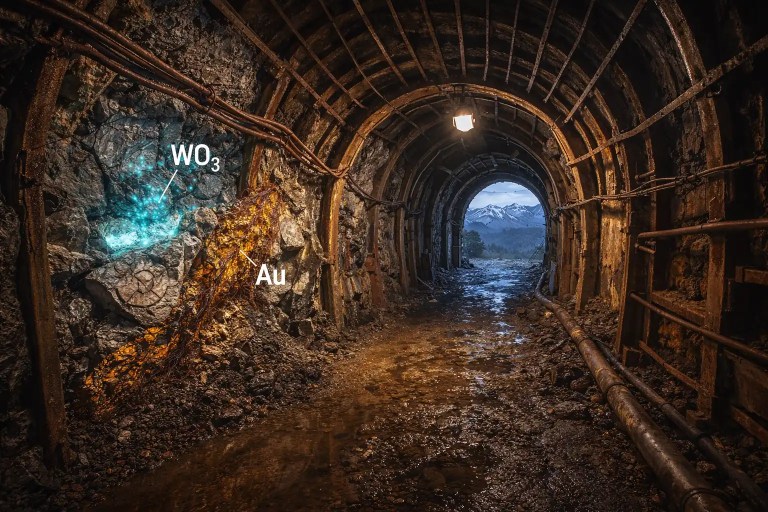
Sampling across the corridor returned high-grade scandium and yttrium at prospects spanning more than 5 kilometres from the Radium Hill mine. The highest scandium grade — 959 parts-per-million Sc2O3 — came from Bonython Hill, the northernmost historical working on trend. The same sample also contained 843ppm Y2O3 and 1,333ppm U3O8.
At Bristowe’s Prospect, mineralised lodes produced assays up to 721ppm Sc2O3, 1,728ppm Y2O3 and 3,526ppm U3O8. Railway Prospect, positioned only 100 metres along strike from the historic mine, returned 253ppm Sc2O3, 1,333ppm Y2O3 and the program’s highest uranium grade at 3,597ppm U3O8.
Taylor Shaft, located further northeast, delivered up to 123ppm Sc2O3, 2,235ppm Y2O3 and 1,545ppm U3O8. Anomalous results appear at both ends of the corridor, supporting the interpretation of a broader mineralised system.
Geological Interpretation Strengthens
The corridor aligns with the interpreted axial plane of a domed anticlinal fold. Reprocessed radiometric and magnetic datasets indicate that roughly half of the structural feature is obscured by soil and alluvial cover. This increases the potential for concealed lodes that have never been drill-tested.
Chair Gabriel Chiappini said: “It’s highly encouraging to receive positive assay results from ongoing groundwork at Radium Hill as our geological model continues to develop.” He added that the new results “confirm that high critical mineral values, in the form of scandium and yttrium, were detected at multiple prospects along the length of the sample area.”
Next Steps for 2026
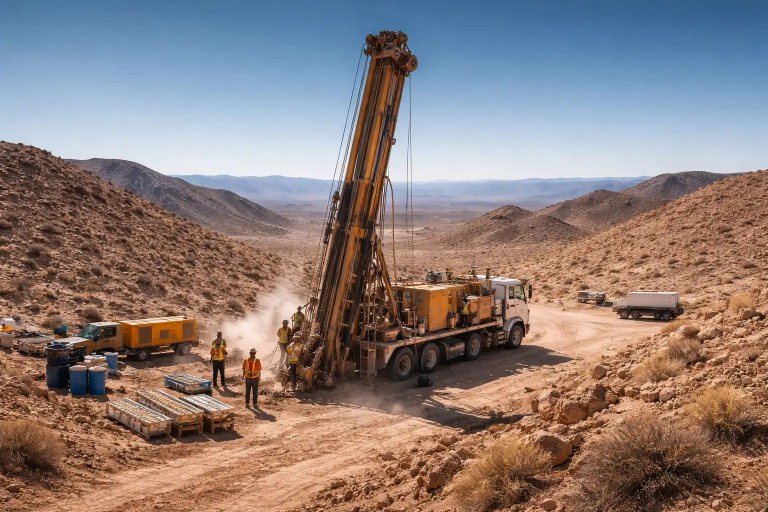
HRE’s refreshed board intends to accelerate work across the project portfolio. At Radium Hill, upcoming work will include geological mapping, integrated geophysics and refining drill targets guided by the revised structural model. With no drilling undertaken for more than six decades in many parts of the corridor, the company sees opportunity to advance previously overlooked prospects.