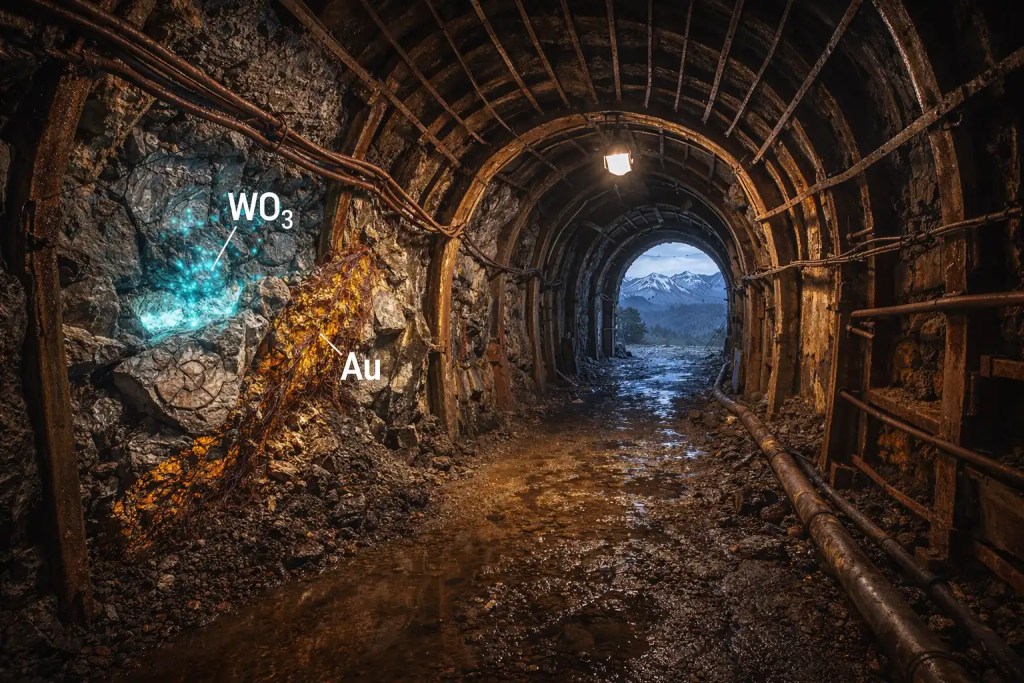
Apollo Minerals (AON:ASX) has regained legal control of its Couflens exploration permit in southern France, reopening a five-year window over one of Europe’s highest-grade historic tungsten operations.
The reinstated permit covers 42 square kilometres in the Pyrenees and includes the former Salau mine, which operated from 1971 to 1986. During its mine life, Salau produced about 930,000 tonnes at an average grade of 1.5% tungsten trioxide, delivering nearly 14,000 tonnes of concentrate.
Production grades improved late in the mine’s life, reaching up to 2.5% tungsten trioxide, before closure following a collapse in tungsten prices.
Legal clarity after extended court process
The reinstatement follows a ruling by France’s highest administrative court, the Conseil d’État, which overturned earlier cancellations linked to procedural issues rather than geology or financial capacity.
The decision restores the original 2016 ministerial decree granting the permit to Apollo’s French subsidiary, Variscan Mines.
While a third-party appeal has reportedly been lodged with the Ministry, the permit is now valid in form, procedure, and substance under French law.
Salau’s tungsten grades… globally unusual
Salau was historically one of the highest-grade tungsten mines worldwide. Few modern tungsten projects report comparable grades at scale.
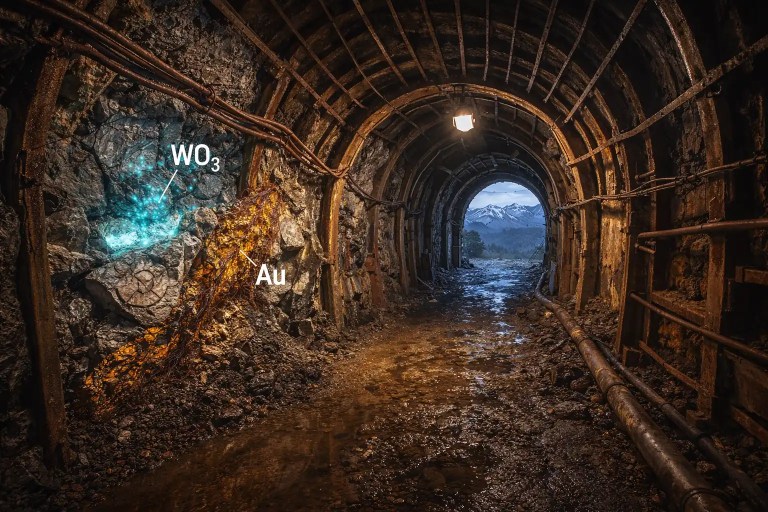
Beyond tungsten, the system carries meaningful gold content that was never recovered during historical operations. Gold was not routinely sampled or processed, leaving potential upside unaccounted for in prior mine economics.
Surface sampling has since returned rock chip grades up to 24.5 grams-per-tonne gold and tungsten grades exceeding 8% tungsten trioxide.
Mineralisation remains open at depth
Historical underground drilling confirmed mineralisation extending below existing mine workings, particularly within the Veronique zone.
Sampling from depths approaching 600 metres returned gold intersections including 8.5 metres at 3.4 grams-per-tonne gold with 2% tungsten trioxide.
The mineralised system remains open down-plunge, with no drilling conducted since mine closure in 1986.
Regional corridor expands the opportunity set
Gold and tungsten mineralisation extends beyond the historic mine footprint along a five-kilometre structural corridor.
Multiple fault-hosted targets west of Salau show surface gold and tungsten expressions, indicating potential for additional discoveries.
Tailings sampling has also identified gold values up to 8.9 grams-per-tonne and average tungsten grades near 0.5%, supporting possible reprocessing studies.
Strategic relevance inside Europe
Tungsten is classified by the European Union as a top-tier Critical Raw Material due to supply concentration and limited substitutes.
China controls over 80% of global tungsten production, increasing interest in European sources with existing infrastructure.
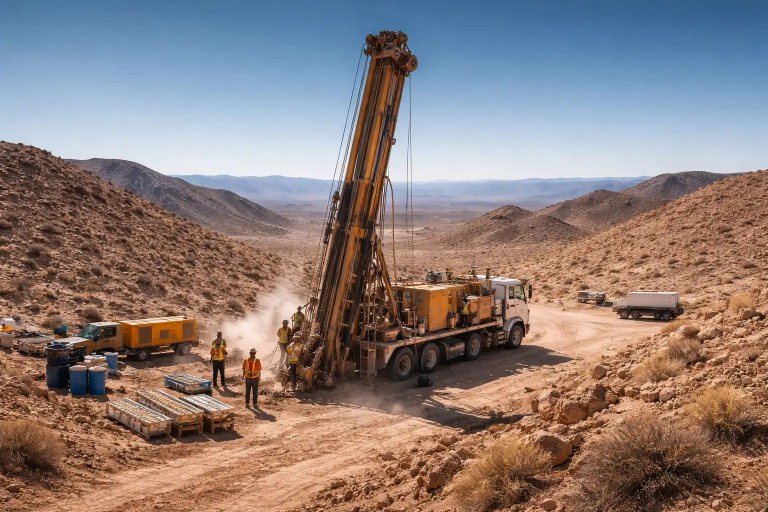
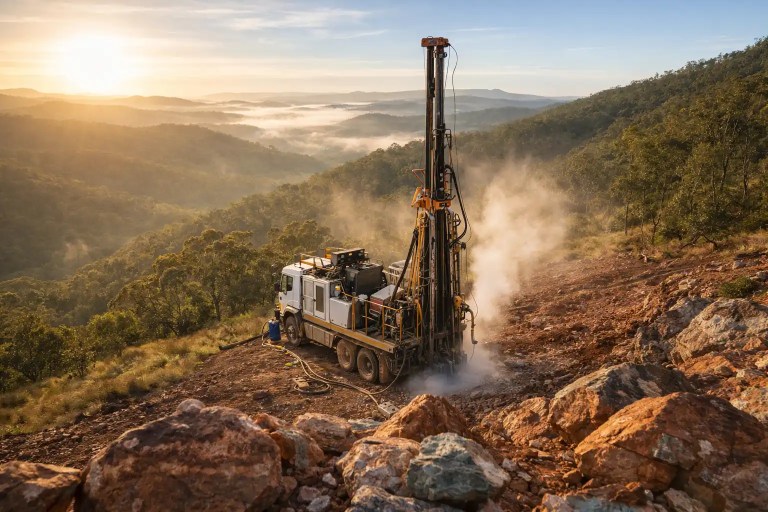
Apollo has indicated it will now re-evaluate historical data, refine exploration programs, and design new surface and geophysical work ahead of drilling.