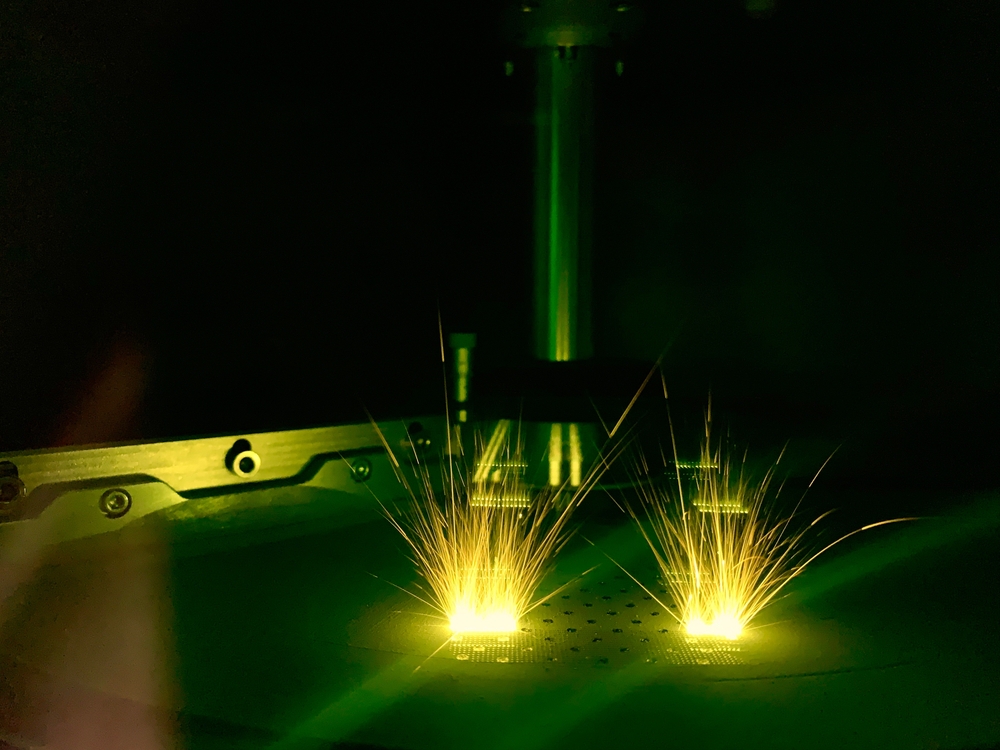
Additive manufacturing (AM), long associated with rapid prototyping and plastic components, is undergoing a major transformation. Thanks to breakthroughs in metal printing, software automation, and multi-material capabilities, 3D printing is now playing a critical role in aerospace, energy, and medical manufacturing—industries once reliant on castings, forgings, and subtractive machining.
Metal Printing Powers Aerospace Innovation
Leading the charge are metal additive technologies like Laser Powder Bed Fusion (LPBF) and Directed Energy Deposition (DED). These systems enable the production of high-performance components with complex geometries and minimal waste. Companies such as GE Additive, Aurora Labs, and Velo3D are now printing fully functional jet engine parts, hydrogen turbine blades, and satellite thrusters—many of which were previously impossible or uneconomical to make using traditional methods.
In aerospace, additive manufacturing is moving from lab to launchpad. SpaceX, Rocket Lab, and Relativity Space are using 3D printing to reduce part counts and accelerate production timelines. Relativity recently announced it had 3D-printed over 85% of its Terran R rocket, including structural components and propulsion systems. Meanwhile, Aurora Labs (ASX: A3D) has completed the design freeze for a 3D-printed micro gas turbine engine under an Australian Defence Force contract—a major milestone toward sovereign propulsion manufacturing.
Energy and Healthcare Sectors Adopt AM for Performance and Speed
The energy sector is also seeing a shift. Siemens Energy and Baker Hughes are leveraging AM to refurbish turbine components, reduce lead times, and develop next-generation hydrogen combustion parts. Metal AM’s ability to fabricate parts with internal cooling channels and high-temperature alloys is particularly valuable in gas turbines and nuclear power systems.
In healthcare, biocompatible 3D-printed implants and surgical tools are already in use. Johnson & Johnson and Stryker have developed titanium spinal cages and joint implants using AM, enabling patient-specific solutions and shorter recovery times. Emerging technologies like bioprinting—where living cells are printed layer by layer—are opening doors to artificial tissues and organ scaffolds.
From Niche Tool to Strategic Manufacturing Platform
The next frontier lies in scalability and qualification. Regulatory bodies, including NASA and the U.S. Department of Defense, are setting standards to certify AM parts for mission-critical use. As AI-driven design tools and real-time process monitoring mature, additive manufacturing is poised to disrupt trillion-dollar supply chains.
From defence to decarbonization, AM is no longer a niche innovation—it’s a strategic manufacturing platform reshaping how the world builds.
To find out more about additive manufacturing, see the youtube video here from Aurora Labs (ASX: A3D).